

1. The Core Question: RedCap CPE and Coverage Gaps
The advent of 5G Reduced Capability (RedCap) devices promises cost-efficient, mid-tier connectivity for industrial and consumer applications. However, a critical operational concern persists: Can a RedCap CPE automatically fall back to legacy networks when 5G signals vanish? In signal dead zones—basements, rural fringes, or shielded buildings—the answer depends on chipset design, firmware logic, and radio resource management. Unlike premium 5G smartphones, many RedCap CPEs are engineered as 4G LTE CPE hybrids, meaning they natively support LTE anchor bands. This dual-mode capability is not optional for most vendors; it is a baseline requirement for market acceptance. Without fallback, the device becomes a paperweight in non-standalone (NSA) deployments where 5G coverage remains patchy.
2. Understanding the Fallback Mechanism: From 5G to LTE
RedCap operates within the 5G NR framework but shares the same core network (5GC) or evolved packet core (EPC) in NSA mode. When a RedCap CPE detects that Reference Signal Received Power (RSRP) drops below -120 dBm or Signal-to-Noise Ratio (SNR) degrades under 0 dB, it initiates a cell reselection or handover procedure toward an available LTE cell. This process relies on system information blocks (SIBs) that broadcast LTE neighbor cells. Modern baseband modems, such as those from Qualcomm or MediaTek, implement a fast return timer (e.g., 3–5 seconds) before attempting fallback. During this transition, the device acts as a CPE 4g router, re-establishing PDN connectivity via the LTE stack. Importantly, the fallback is not a simple frequency switch; it involves renegotiating QoS flows, updating APN settings, and re-authenticating with the HSS. Successful fallback preserves the IP session, avoiding total service disruption for connected endpoints.
3. Real-World Performance in Dead Zones
In a typical indoor dead zone—concrete walls or metal shelving—5G mmWave and even sub-6 GHz bands suffer severe penetration loss. Here, a RedCap CPE with fallback logic scans for LTE bands like B3 (1800 MHz) or B28 (700 MHz), which offer superior propagation. Field tests indicate that a well-implemented fallback yields throughput of 50–80 Mbps on LTE, compared to 0 Mbps on 5G. However, latency increases from ~15 ms to ~35 ms, which may affect real-time applications but remains acceptable for video streaming or IoT telemetry. The device’s antenna design also plays a role: MIMO configurations optimized for 5G may underperform on LTE, yet most RedCap CPEs include wideband tuners to mitigate this. Thus, the device effectively transforms into a 4g router CPE, leveraging existing LTE infrastructure to maintain “always-on” connectivity. Operators often prefer this behavior over aggressive 5G re-selection attempts that drain battery and cause ping-pong effects.
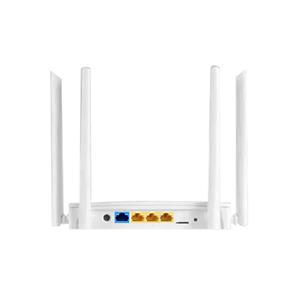
4G LTE CPE
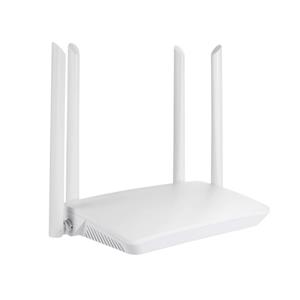
4g router CPE
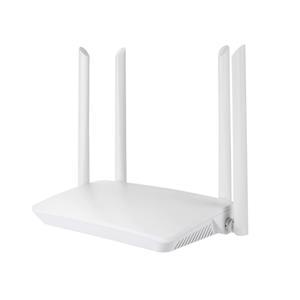
4g CPE router
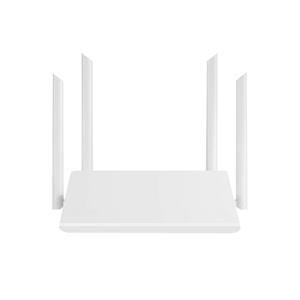
LTE CPE router
4. Configuration Parameters That Control Fallback
Network operators and end-users can influence fallback behavior via several knobs. The threshServLow and threshServingLow parameters in the modem’s NVM define the RSRP/RSRQ thresholds for initiating inter-RAT measurements. Additionally, the fallbackTimer dictates how long the CPE waits before declaring 5G unreachable—values range from 2 to 10 seconds. Some advanced firmware allows manual locking to LTE only, effectively turning the device into a dedicated 4g CPE router for stable environments. Conversely, in mobility scenarios, the CPE may prioritize LTE to avoid frequent handover failures. It is crucial to note that fallback does not automatically mean return to 5G; a separate “high-priority” reselection rule, governed by threshXHigh, triggers re-attachment only when 5G signal sustains above -110 dBm for a continuous period. These settings are often hidden from consumers but can be exposed via AT commands or vendor-specific web UIs.
5. Operational Challenges and Mitigations
While fallback works in principle, several pitfalls exist. First, LTE cells may be congested, offering insufficient bandwidth for the CPE’s intended applications—this reduces the effective gain of fallback. Second, the transition can drop active UDP or TCP sessions if the gateway does not support PGW relocation with S-GW change. Third, some RedCap CPEs lack full LTE category support (e.g., Cat.4 or Cat.6), limiting downlink to 150 Mbps. To address these, modern devices implement Fast Return with Context Transfer, preserving the EPS bearer ID. Moreover, operators can configure dedicated PRACH resources on LTE to expedite random access. For critical deployments, a dual-radio design (separate 5G and LTE modems) eliminates switchover time, though this increases cost. Ultimately, the device must balance between being a nimble 5G terminal and a robust LTE CPE router—a duality that firmware updates continue to refine.
6. When Fallback Fails: Troubleshooting Steps
If a RedCap CPE remains disconnected in a dead zone, despite visible LTE signals, the issue often lies in PLMN selection or forbidden TA lists. Check the SIM’s roaming agreement—some MVNOs restrict fallback to specific LTE bands. Secondly, verify that the CPE’s firmware supports band locking; without it, the device may scan endlessly. Third, examine the RRC release cause; if the eNB returns “#15” (no suitable cell), the CPE may need a manual network search. In such cases, rebooting the device forces a fresh cell selection, often resolving temporary glitches. For persistent failures, consider external directional antennas that boost LTE reception, converting the unit into a reliable 4G LTE CPE even under -125 dBm. Remember, fallback is a logical process—not a physical guarantee—so environmental factors like interference from adjacent bands can still impair performance.
7. Future Outlook and Best Practices
As 5G SA deployments expand, RedCap CPEs will increasingly rely on 5G core slices, but LTE fallback remains indispensable for coverage continuity. Industry best practices recommend setting fallback thresholds conservatively (e.g., -115 dBm for 5G to LTE) to avoid premature switching while ensuring fail-safe operation. For enterprise users, pairing the CPE with an SD-WAN edge router can aggregate both 5G and LTE paths, using fallback as a backup rather than a primary mode. Meanwhile, chipset vendors are introducing predictive algorithms that learn dead-zone patterns, pre-emptively buffering data before fallback. Ultimately, the question is not if RedCap CPE can fall back, but how gracefully it performs the transition. With proper configuration, any 4g CPE router or LTE CPE router variant can deliver dependable service, bridging the gap until 5G densification eliminates dead zones altogether. For now, fallback is not a weakness—it is a resilience feature that ensures your fixed wireless access remains truly wireless.
Fujian C-TOP Electronics Co., Ltd. was founded by Ms. Hong Liying in 1995. The company started with the research and production of telephones and hotel telephone billing devices. We provide one-stop OEM&ODM services to meet the different needs of our respected customers. Customers can receive full chain services from product design, raw material procurement, production and manufacturing to logistics distribution and after-sales service.