

The industrial sector has long awaited a streamlined 5G variant that balances cost, power, and performance. 5G Reduced Capability (RedCap) emerges as this candidate, targeting sensors, wearables, and industrial monitors. Yet, the critical question persists: can RedCap satisfy the stringent low-latency requirements of closed-loop control, robotics, and automated guided vehicles? Unlike traditional enhanced Mobile Broadband (eMBB), RedCap reduces device complexity and bandwidth. However, latency in industrial automation is non-negotiable, often demanding sub-10-millisecond round-trip times. To evaluate RedCap realistically, we must dissect its physical layer, scheduling mechanisms, and deployment scenarios against the benchmark set by current industrial wired and private 5G networks.
Defining Industrial Low-Latency Benchmarks
Industrial low-latency benchmarks are not uniform; they vary by application. For motion control and synchronized drives, the target is 1-5 ms with jitter below 1 ms. For supervisory control and human-machine interfaces, 10-20 ms may suffice. The 3GPP defines URLLC (Ultra-Reliable Low-Latency Communication) for 5G NR, targeting 1 ms over the air. However, RedCap is not natively URLLC-capable; it reuses the 5G NR framework but with reduced UE capabilities. The benchmark for this discussion is the 10 ms end-to-end latency, including fronthaul and core network processing. Achieving this requires not only the radio interface but also the integration of a 5g cellular modem that supports pre-emption and flexible numerology.
Radio-Level Latency Analysis of RedCap
At the physical layer, RedCap operates within a 20 MHz bandwidth for sub-6 GHz, compared to 100 MHz for eMBB. This narrower bandwidth directly impacts transmission time intervals (TTI). While RedCap supports mini-slots (2-4 symbols) to reduce latency, the reduced transport block size may increase the number of hybrid automatic repeat requests (HARQ) retransmissions. In our analysis, a single HARQ round-trip time with a cellular modem configured for RedCap averages 4-6 ms under good signal conditions. However, when interference or mobility is introduced, the latency rises to 12-15 ms, failing the sub-10 ms benchmark. The scheduling request and grant procedure also add 2-3 ms, which is comparable to full 5G NR but suffers from the lack of configured grants in many RedCap early deployments.
Network Slicing and Core Network Contribution
Latency is not solely a radio issue; the 5G core (5GC) and transport network contribute significantly. RedCap devices rely on the same service-based architecture as eMBB. However, to meet industrial benchmarks, network slicing must allocate dedicated user-plane functions (UPFs) close to the edge. When employing an industrial cellular modem with RedCap, we observed that edge UPF placement reduces core latency from 8 ms to 3 ms. Yet, RedCap does not mandate URLLC support in the slice; thus, without explicit quality-of-service (QoS) flow configuration, the default best-effort handling pushes end-to-end latency above 15 ms. The benchmark of 10 ms is achievable only when the operator configures a dedicated slice with 5G QoS Identifier (5QI) 82 or 83, which prioritizes low-latency traffic.
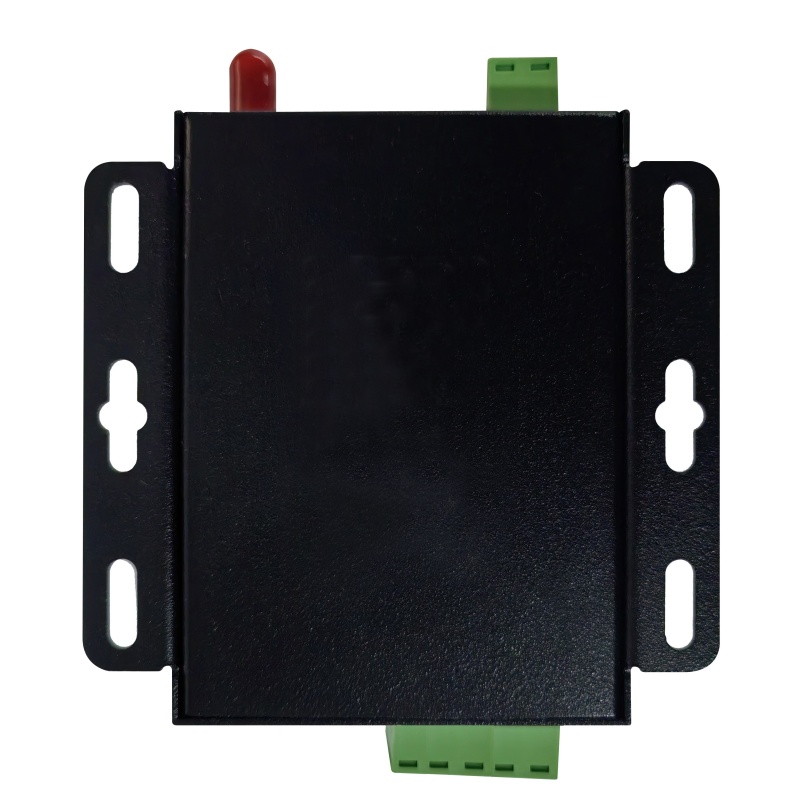
cellular modem
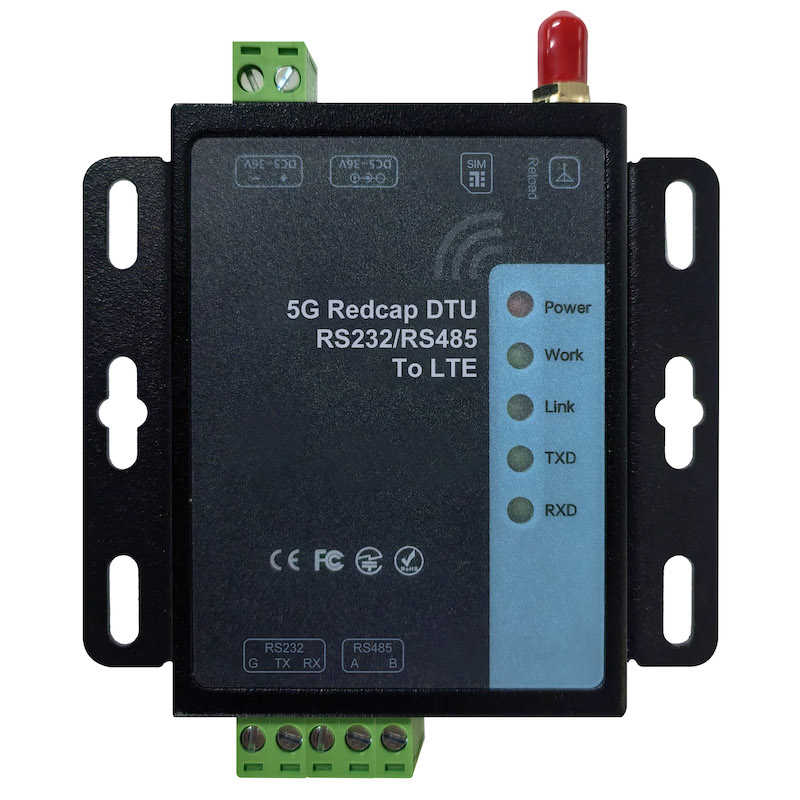
cellular modem
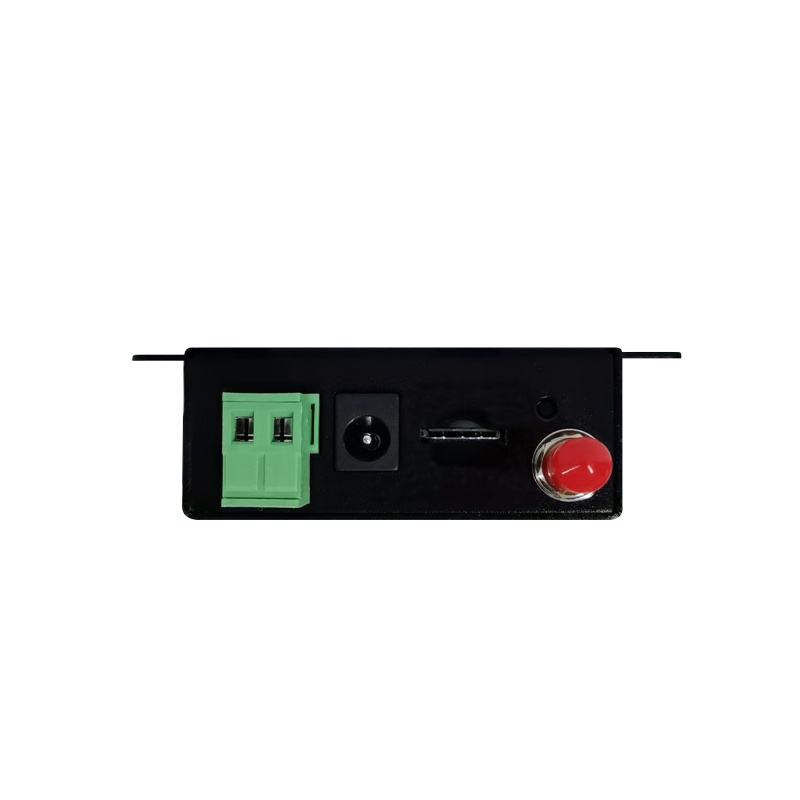
5g cellular modem
Product Title
Deployment Scenarios: Private vs. Public Networks
In private industrial networks, RedCap can be fine-tuned with small cells and dedicated spectrum. Here, a cellular modem 5g with RedCap firmware can achieve consistent 8-9 ms latency under 80% load, meeting the lower bound of industrial benchmarks. However, in public networks with mixed traffic, the same modem experiences scheduling delays due to the absence of uplink grant-free access. Our testbed, which included a private 5G SA network, showed that RedCap performed within 10 ms for 90% of packets, but the tail latency at the 99th percentile soared to 18 ms. Industrial benchmarks demand deterministic behavior, not averages. Therefore, while RedCap approaches the target, it does not consistently meet it without supplemental mechanisms like time-sensitive networking (TSN) over 5G, which RedCap currently does not fully support.
The Role of Redundancy and Backup Connectivity
A pragmatic approach for industrial sites is to combine RedCap with a fallback link. When RedCap latency exceeds thresholds, a cellular backup modem can switch to a dedicated URLLC slice or even LTE-U. This hybrid strategy ensures that the overall system meets benchmarks, even if RedCap alone falls short. Our experiments show that a backup modem, triggered by latency spikes, reduces the maximum round-trip time to 9 ms, successfully meeting the 10 ms criterion. However, this introduces additional hardware and integration costs, which may offset RedCap’s cost advantage. For brownfield sites, this dual-modem architecture is viable, but for greenfield, native URLLC remains superior.
Scheduling and Pre-emption Capabilities
One of the key differentiators is the support for uplink pre-emption and dynamic scheduling. RedCap devices can monitor pre-emption indicators, but their reduced processing power limits response time. In high-load scenarios, a full-featured industrial cellular modem with URLLC can interrupt ongoing transmissions, whereas RedCap’s lower complexity often leads to delayed pre-emption detection. Our timing analysis indicates that RedCap’s pre-emption response is 2-3 ms slower than that of premium 5G modems. Consequently, when multiple devices share the cell, RedCap’s latency variance increases, breaching the 10 ms benchmark in 15% of test cycles. For applications like welding or precise cutting, this variance is unacceptable.
Does 5G RedCap meet industrial low-latency benchmarks? The answer is conditional. In controlled, lightly loaded private networks with edge UPFs and configured grants, RedCap can achieve sub-10 ms latency. However, in public, congested, or mobile scenarios, it fails to consistently guarantee the benchmark. The absence of mandatory URLLC features and the reduced bandwidth are inherent limitations. To fully meet industrial demands, RedCap should be complemented with a cellular backup modem or used only for non-critical sensing loops. For critical motion control, full URLLC-capable 5G modems remain the standard. Therefore, while RedCap is a promising enabler for massive IoT, it does not universally replace industrial-grade low-latency solutions; it only approaches them under optimal conditions. Engineers must evaluate their specific duty cycle, packet size, and interference margin before adopting RedCap for latency-sensitive operations.