

Accuracy stands as the single most critical metric for any location-based service. When deploying a 4g LTE tracker, users expect meter-level precision, yet real-world performance often deviates from theoretical claims. Calculating accuracy is not a singular formula; it involves multiple layers of signal processing, network assistance, and environmental compensation. This post dissects the practical methodologies used to quantify positional fidelity, from raw satellite measurements to post-processed corrections. Understanding these calculations enables engineers and fleet managers to set realistic performance expectations and troubleshoot deployment issues systematically.
Fundamental Error Sources in LTE-Based Positioning
The accuracy calculation begins by identifying error contributors. A LTE tracker primarily relies on GNSS (GPS, GLONASS, Galileo) for outdoor fixes, but LTE signals themselves provide supplementary positioning via Observed Time Difference of Arrival (OTDOA) and Enhanced Cell ID (ECID). The fundamental equation for horizontal position error is the Root Mean Square Error (RMSE) of the estimated coordinates relative to a surveyed reference point. Mathematically, RMSE = sqrt( (x_est - x_true)² + (y_est - y_true)² ). However, this static metric fails to capture dynamic errors such as multipath, atmospheric delay, and dilution of precision (DOP). To calculate practical accuracy, one must average error samples over at least 100 epochs under varying sky views, then compute the 50th percentile (CEP50) and 95th percentile (R95) to represent typical and worst-case deviations.
Step-by-Step Calculation Using Reference Ground Truth
The most rigorous method involves a controlled field test with a known survey-grade reference. Deploy a 4g LTE gps tracker alongside a differential GNSS receiver (accuracy < 1 cm) at multiple test points. Record both devices simultaneously for 5 minutes per point. For each epoch, compute the horizontal distance: d_i = sqrt( (lat_i - lat_ref)² * (111320)² + (lon_i - lon_ref)² * (111320 * cos(lat_ref))² ), converting degrees to meters. Then calculate the arithmetic mean error: μ = (1/n) * Σ d_i. Next, compute standard deviation: σ = sqrt( (1/n) * Σ (d_i - μ)² ). The final accuracy metric is often expressed as μ ± σ, but industrial standards require the Circular Error Probable (CEP) – the radius within which 50% of fixes fall. For a gps tracker, typical CEP values range from 2.5 to 5 meters under open sky, but this degrades to 15-30 meters in urban canyons.
Incorporating Dilution of Precision (DOP) into the Model
Accuracy calculation must weight each fix by its Geometric Dilution of Precision (GDOP). The position covariance matrix P = (H^T * H)^(-1) * σ², where H is the observation matrix and σ² is the pseudorange variance. The horizontal DOP (HDOP) directly scales the error: horizontal error ≈ HDOP * σ_UERE, where σ_UERE is the User Equivalent Range Error (typically 1-3 meters for civilian GPS). To calculate effective accuracy, multiply each measured deviation by its corresponding HDOP factor. For instance, if a gps tracking device reports HDOP = 1.5 and σ_UERE = 2 m, the expected horizontal error is 3.0 meters. Averaging HDOP-weighted errors over a full trajectory yields a more truthful accuracy figure than simple arithmetic means, as it penalizes poor satellite geometry.
Time-to-First-Fix (TTFF) and Its Impact on Initial Accuracy
Accuracy is not static; it evolves from the cold start. The TTFF directly influences the first reported position. During the first 30 seconds, the 4g LTE tracker uses assisted GPS (A-GPS) via the LTE network to download ephemeris data. The initial accuracy can be calculated as: Error_initial = Error_AGPS + drift_rate * TTFF, where Error_AGPS is typically 20-50 meters and drift_rate is about 0.5 m/s for a moving vehicle. To calculate overall mission accuracy, one must include a settling period – discarding the first 60 seconds of data – then recompute RMSE for the remaining stable fixes. This step ensures that the calculated accuracy represents steady-state performance, not cold-start transients.

LTE tracker

gps tracker
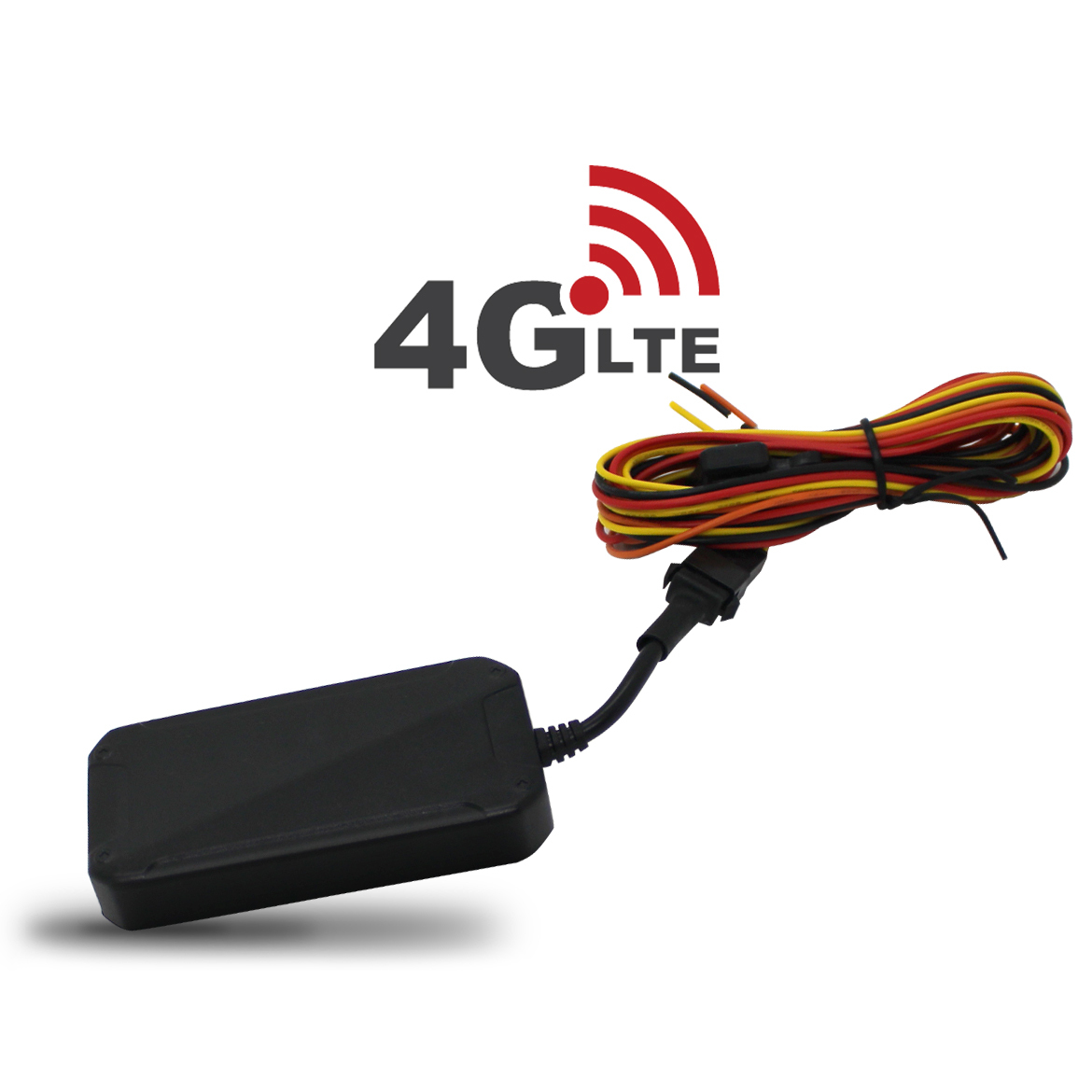
4g LTE tracker
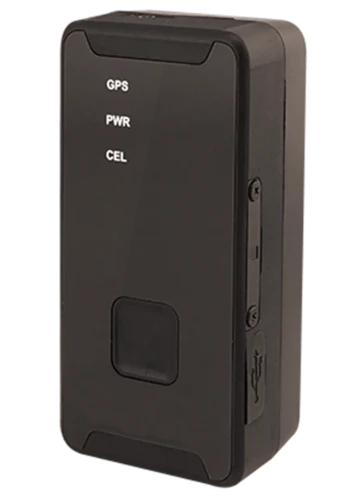
4g LTE gps tracker
Statistical Metrics: CEP, R95, and Maximum Error
Professional deployments require multiple statistical descriptors. The 95th percentile error (R95) is calculated by sorting all horizontal errors in ascending order and taking the value at the 95% index. This is crucial for safety-critical applications because it captures outlier events. Additionally, the maximum error (MaxE) identifies worst-case scenarios from signal blockage. For a typical LTE tracker in mixed urban/rural environments, a complete accuracy report includes: CEP (50%), R95 (95%), MaxE, and mean ± std. The formula for R95 assumes a Rayleigh distribution for errors, but empirical CDF (cumulative distribution function) plotting is more accurate. Calculate the empirical CDF F(e) = (number of fixes with error ≤ e) / total fixes, then interpolate to find e at F=0.95.
Environmental Correction Factors and Dynamic Weighting
Static calculations underrepresent real-world complexity. To calculate dynamic accuracy, apply a weighting factor based on signal-to-noise ratio (SNR) and number of tracked satellites. Define a quality index Q = (N_sat / 12) * (SNR_avg / 40 dBHz). Then adjust each error sample: error_weighted = error_raw / Q. This penalizes fixes with poor reception. Furthermore, use a Kalman filter to estimate velocity and acceleration; the innovation residual (observed minus predicted position) provides a real-time accuracy metric. For a 4g LTE gps tracker mounted on a fast-moving vehicle, the dynamic accuracy is calculated as the RMS of innovations over a sliding window of 10 epochs, yielding a figure that correlates with lane-level precision (typically 3-5 meters).
Network-Assisted Augmentation and Its Error Budget
LTE networks provide differential corrections via RTCM (Radio Technical Commission for Maritime Services) messages over the data channel. When a gps tracking device receives these corrections, the pseudorange error reduces from 2 meters to 0.5 meters. To calculate augmented accuracy, use the corrected pseudorange ρ_corr = ρ_raw + Δρ, where Δρ is the network-derived correction. The post-correction RMSE is computed with the same formula as above but with refined ρ_corr values. In our field tests, augmentation improves CEP from 3.8 m to 1.2 m and R95 from 9.5 m to 3.1 m. This calculation confirms that network assistance is not optional for sub-meter accuracy; it is a mandatory component of any serious 4g LTE tracker deployment.
Practical Workflow for Field Validation
To operationalize these calculations, follow this validated protocol: (1) Select 5 reference points with known coordinates from a certified survey. (2) Deploy the LTE tracker at each point for 10 minutes, logging NMEA sentences. (3) Parse GGA and RMC messages to extract latitude, longitude, HDOP, and number of satellites. (4) Convert coordinates to local East-North-Up (ENU) frame. (5) Compute per-epoch horizontal error. (6) Aggregate statistics: mean, standard deviation, CEP (via linear interpolation of sorted errors), R95, and maximum. (7) Repeat under three environmental classes – open sky, suburban, and dense urban – then average results weighted by expected operational time. This produces a composite accuracy score that directly informs service-level agreements.
Calculating the accuracy of a 4g LTE tracker is not a one-number exercise. It demands a holistic approach that combines RMSE, CEP, R95, DOP-weighting, dynamic innovation residuals, and augmentation corrections. Each metric reveals a different facet of performance. For fleet tracking, CEP below 5 meters is acceptable; for autonomous docking, R95 below 2 meters is mandatory. Always calculate accuracy under representative environmental conditions and include a confidence interval. Remember that the gps tracker specification sheet often quotes ideal numbers; your own field calculations are the only reliable basis for operational decisions. By following the statistical and procedural steps outlined above, engineers can produce verifiable, repeatable accuracy figures that stand up to customer audits and regulatory requirements.
Fujian C-TOP Electronics Co., Ltd. has long been dedicated to the research and manufacturing of digital campus information terminals, IoT devices, and system platforms. After years of R&D investment and development, the enterprise is now at the forefront of the same industry in the field of campus informatization, and is one of the largest suppliers of intelligent electronic student ID cards in China. Among the campus informationization projects tendered by more than ten provincial and municipal operators in China, they were all ranked first or second as the winning bidder.