

Deploying a gps tracker for mission-critical asset monitoring demands more than satellite visibility; it requires an unbroken chain of cryptographic integrity from the antenna to the cloud API. When that chain spans public 4G infrastructures, the precision of positional fixes—often centimetre-level with RTK—becomes vulnerable to replay attacks, man-in-the-middle proxies, and SIM-swap interception. This guide dissects enterprise-grade countermeasures while maintaining sub-metre accuracy, written for engineers and fleet operators who treat location as intellectual property.
Threat Model: Why 4G Is Not a Trusted Backhaul
The 4G LTE core relies on shared PDN gateways, where user-plane traffic traverses GTP tunnels that are encrypted only between eNodeB and SGW—not end-to-end. A rogue eNodeB or compromised MME can inject falsified NMEA sentences into your UDP stream. Therefore, any gps tracking device must treat the cellular modem as a public channel. Assume that every NTP timestamp and ephemeris packet is observable. The solution is not to avoid 4G, but to overlay a zero-trust security fabric that authenticates each fix before it reaches your cloud sink.
End-to-End Encryption with PSK and ECDH
For a small gps tracker with constrained MCU and battery, asymmetric cryptography (ECDH P-256) is preferred over TLS 1.3’s full handshake, which adds 2–3 seconds of latency per reconnect. Generate a per-device pre-shared key (PSK) during provisioning, then derive session keys for AES-GCM using a counter based on GPS week number and IMSI. This ensures that even if the 4G bearer is decrypted at the PGW, the payload—containing latitude, longitude, HDOP, and velocity—remains opaque. Always rotate keys every 12 hours or after 1,000 fix reports.
Authentication Watermarking for Anti-Spoofing
High-precision data is worthless if source origin is ambiguous. Embed a HMAC-SHA256 digest into the unused bits of the NMEA proprietary sentence (e.g., $PGRMZ). The digest covers the fix timestamp, satellite PRN list, and the device’s unique serial. On the cloud side, recompute the HMAC before ingesting into the time-series database. Any mismatch triggers an alert and drops the packet. This is non-negotiable for small tracking devices that operate in urban canyons where multipath and spoofing are indistinguishable without cryptographic proof of origin.

gps tracker
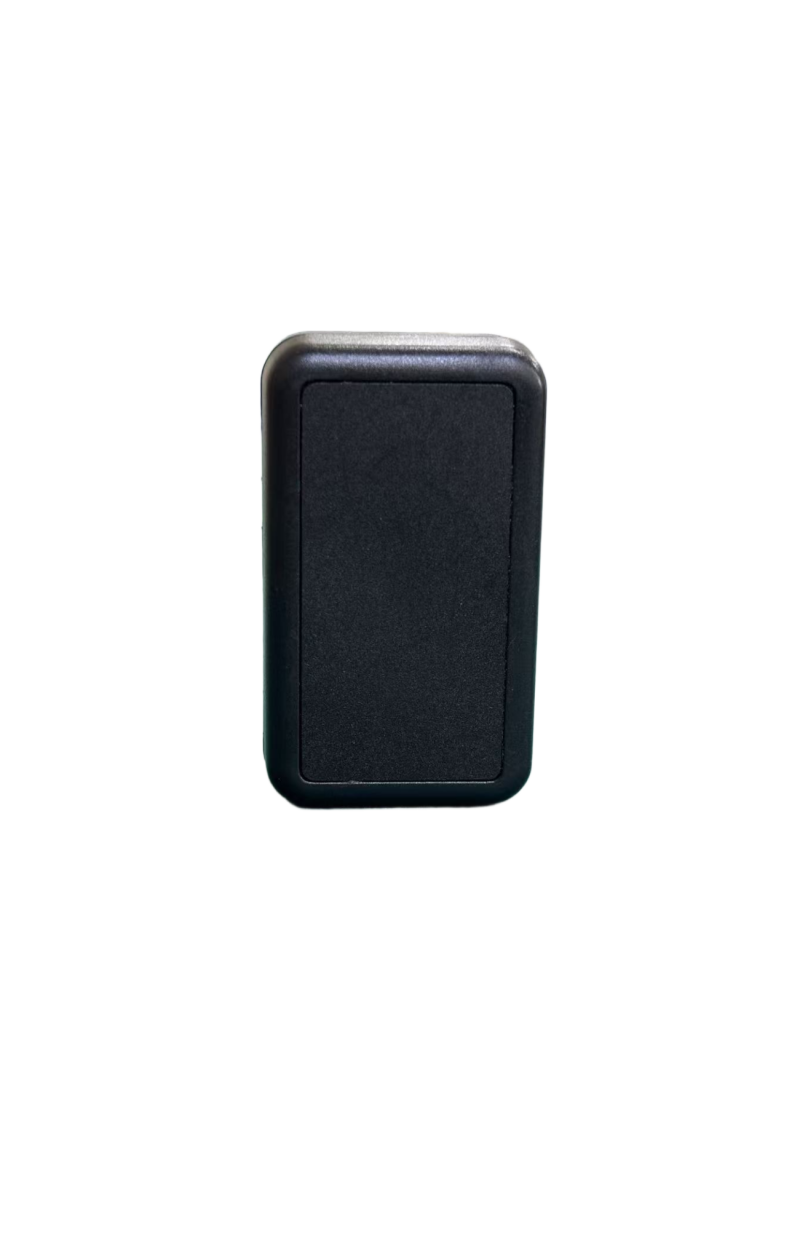
gps tracking device
Compression Without Compromising Precision
RTCM 3.3 correction messages and raw observables generate up to 1.2 KB/s per rover. Over 4G, this inflates data costs and increases exposure windows. Use differential compression: send only delta coordinates (Δφ, Δλ, Δh) relative to a base reference, quantised to 0.0001 arcseconds. Then apply zlib with a dictionary preloaded with common satellite IDs. A 4g gps tracker with this pipeline reduces payload size by 68% while preserving millimetre resolution. Importantly, compression must occur before encryption to avoid redundant entropy; encrypt the compressed binary, not the plaintext JSON.
Session Persistence and Reconnection Resilience
4G networks frequently reassign IP addresses and force RRC state transitions. Each reconnection may expose a new temporary key if not handled carefully. Implement a session resumption token—a JWT signed with the device’s long-term public key—that is renewed every 60 minutes. The token includes the last valid fix sequence number, so the cloud can request retransmission of missing intervals via a lightweight NACK protocol. This prevents data gaps, which are fatal for trajectory reconstruction in autonomous handover scenarios. The gps tracker firmware must store at least 200 fixes in non-volatile memory until an ACK is received.
Cloud-Side Rate Limiting and Anomaly Detection
Even with encrypted payloads, metadata such as cell tower ID, signal strength, and timing advance can leak geolocation patterns. Deploy a sidecar proxy that performs behavioural profiling: compare the incoming fix rate against the expected Doppler shift from the last known heading. If a gps tracking device suddenly reports a 500 m/s velocity change without corresponding cell handover, terminate that session and force a full re-authentication. This rule-based firewall, combined with a Redis-backed sliding window, blocks replay floods without adding more than 5 ms to the pipeline.
Certificate Pinning and OTA Firmware Integrity
The 4G modem itself is a programmable attack surface. During firmware over-the-air (OTA) updates, pin the cloud’s X.509 certificate public key (not just the CA) within the bootloader. Verify the digital signature of each new image before flashing. For a small gps tracker with 512 KB RAM, use Ed25519 signatures—they are smaller and faster than RSA-2048. Additionally, sign the configuration parameters (e.g., NMEA output rate, RTK mountpoint) using the same key, so that an adversary cannot downgrade you to a less precise, less secure mode via malformed HTTP responses.
Redundant Cloud Paths with MQTT-SN and QUIC
Standard TCP/TLS over 4G suffers from head-of-line blocking, especially when transitioning between eNodeBs. Deploy MQTT-SN over QUIC (UDP) on port 443, which allows connection migration without restarting the security context. The 4g gps tracker can send encrypted fixes over two parallel cloud regions simultaneously, deduplicating on the receiver side using the HMAC sequence number. This achieves 99.999% availability even when one regional cloud experiences throttling—critical for autonomous agricultural or marine fleets where data loss incurs financial penalties.
Operational Key Hygiene and Audit Logs
Finally, secure key material must be isolated from the application processor. Use a dedicated secure element (SE) or TEE to store the private ECDH key and perform the HMAC computation. The host CPU only receives the ciphertext. Maintain an immutable audit log of every key generation, revocation, and failed authentication attempt, stored in a WORM-compatible object storage. For fleets of over 10,000 small tracking devices, automate key renewal via a zero-touch provisioning server that signs new keys using a hardware security module (HSM) in the data centre.
Securing high-precision GPS across 4G clouds is not an add-on; it is a foundational design requirement that affects every layer—from the antenna’s LNA to the cloud’s time-series engine. By implementing end-to-end encryption, watermarking, session persistence, and certificate pinning, you transform a vulnerable telemetry stream into a trusted measurement system. Remember: a 4g gps tracker that delivers centimetre accuracy but lacks cryptographic integrity is just a noisy beacon. Prioritise these controls, and your cloud will receive not only precise coordinates but also provable truth.
Fujian C-TOP Electronics Co., Ltd. has long been dedicated to the research and manufacturing of digital campus information terminals, IoT devices, and system platforms. After years of R&D investment and development, the enterprise is now at the forefront of the same industry in the field of campus informatization, and is one of the largest suppliers of intelligent electronic student ID cards in China. Among the campus informationization projects tendered by more than ten provincial and municipal operators in China, they were all ranked first or second as the winning bidder.